

Local SEO · 9 min read
Roofing SEO: How Roofing Companies Get Found on Google
 By Adrian Martinez · 25+ years in web and marketing ·
On this page
- How do roofing companies rank on Google?
- Which roofing searches should your website answer?
- Why does each roofing service need its own page?
- How do you show up for storm and leak searches?
- What should a roofer's Google Business Profile include?
- How do reviews help roofing SEO?
- Should a roofer create a page for every town?
- What order should roofing SEO follow?
- Is SEO worth it for roofers?
- Frequently asked questions about roofing SEO
- Next steps
Roofing search engine optimization (SEO) is the work that puts your company in Google's map and search results when homeowners look for roof repair, replacement or an inspection. Good roofing SEO comes down to one page for each roofing service you sell and a Google Business Profile with real photos of your roofs. Add steady reviews, and write location pages only for towns you work in. Expect it to take months, and judge it by the inspections it books.
We market roofers across Canada, and this guide covers the parts of roofing SEO we work on for every roofing site.
How do roofing companies rank on Google?
Google ranks local results mainly on three factors: relevance, distance and prominence. Its local ranking help page defines relevance as "how well a Business Profile matches what someone is searching for." Distance is how far each business is from the person searching. Prominence is how well known a business is.
In roofing SEO, those three factors turn into practical tasks. Relevance comes from pages and a profile that name the exact work, such as flat roof repair or shingle replacement. Distance depends on where your business is based and where the searcher stands, so you can't change it much. Prominence grows with reviews and with links from other websites.
The same page adds that "businesses with complete and accurate info are more likely to show up in local search results." Get the basics right before you try anything clever. Your business name, address and phone number should match on your website, your profile and every directory listing.
Which roofing searches should your website answer?
Roofing searches fall into three rough groups: urgent jobs, planned jobs and checks. Urgent searches come after a leak or a storm. Planned searches are for jobs booked months ahead, like a full replacement. Checks cover jobs like an inspection before someone buys a house. Each group needs a different kind of page.
A homepage that tries to answer all three groups usually answers none of them well.
| Roofing search | What the homeowner wants to see | Page that should answer it |
|---|---|---|
| Roof leak repair near me | A phone number they can tap and proof you fix leaks | Roof repair page with a call button at the top |
| Storm damage roof repair | How to reach you after severe weather and what you do first | Storm and emergency page |
| Roof replacement | The materials you install and photos of finished roofs | Replacement page with a job gallery |
| Flat roof repair | Proof you work on flat and low-slope roofs | Flat roof page |
| Roof inspection | What the inspection covers and what they receive afterward | Inspection page |
Five roofing searches worth planning a page for, and where each one should land.
Within those groups, each of the five services in the table gets a page of its own. Plan five pages if you offer all five.
Why does each roofing service need its own page?
A page for each service gives Google a clear match for each search, and it gives the homeowner the exact answer they came for. When we build roofing sites, the replacement, shingle and flat roof pages each target their own full-job searches. Those are the searches homeowners make when they want to hire a roofer for a whole job.
A strong service page covers the job in your own words. Say what you install, which areas you cover, what the homeowner can expect on the day and how to reach you. Show before-and-after photos from your own jobs. List the manufacturer certifications you hold and the warranty details you offer.
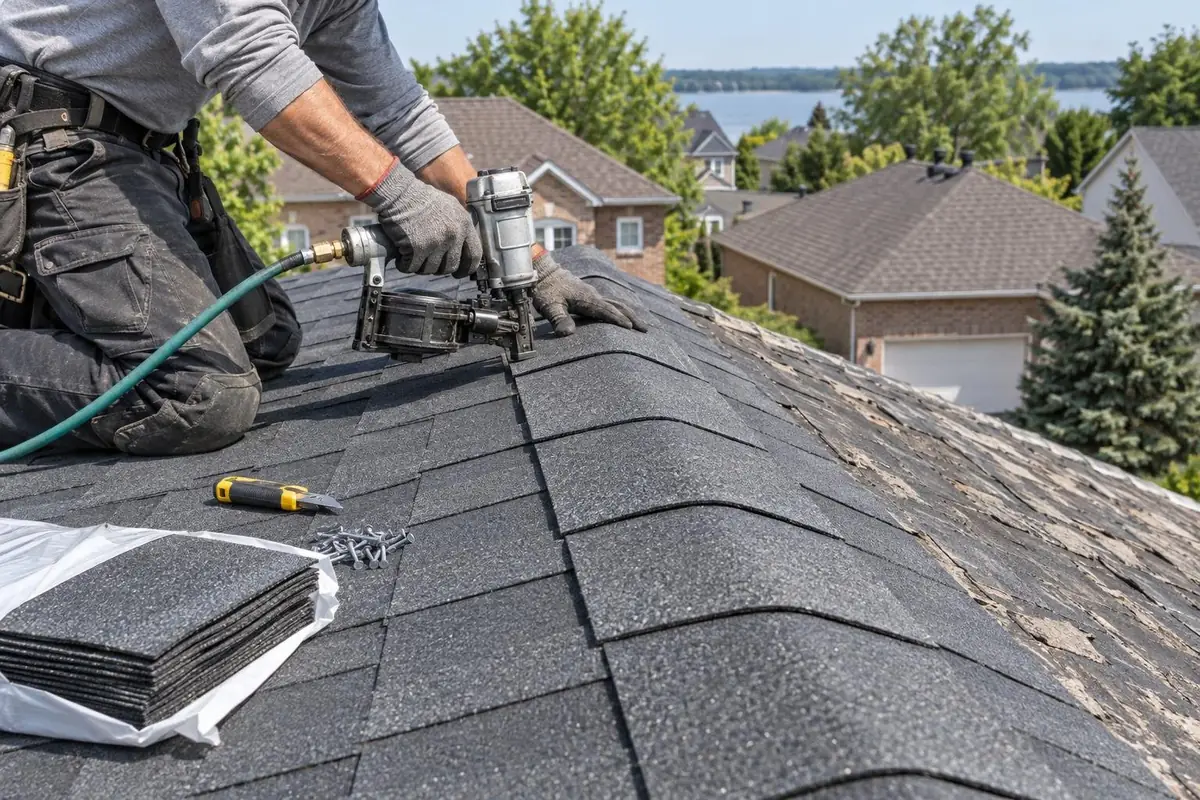
Google's guidance on creating helpful content asks whether a page shows "first-hand expertise and a depth of knowledge." Roofers have plenty of both. Write about real jobs, such as a valley that kept leaking or a flat roof drain that sat too high. That detail tells a homeowner you have seen their problem before.
How do you show up for storm and leak searches?
Build your storm and leak pages well before the windy months, because roofing SEO is slow. Most contractors who use our SEO service see their rankings start to move in two to three months. Stronger results tend to arrive in three to six months, depending on local competition. A page written the morning after a windstorm won't be ranking in time for that storm.
Your storm page should say plainly what you do after severe weather. Cover how homeowners reach you, whether you offer temporary repairs and what your damage inspection includes. List only the services you provide.
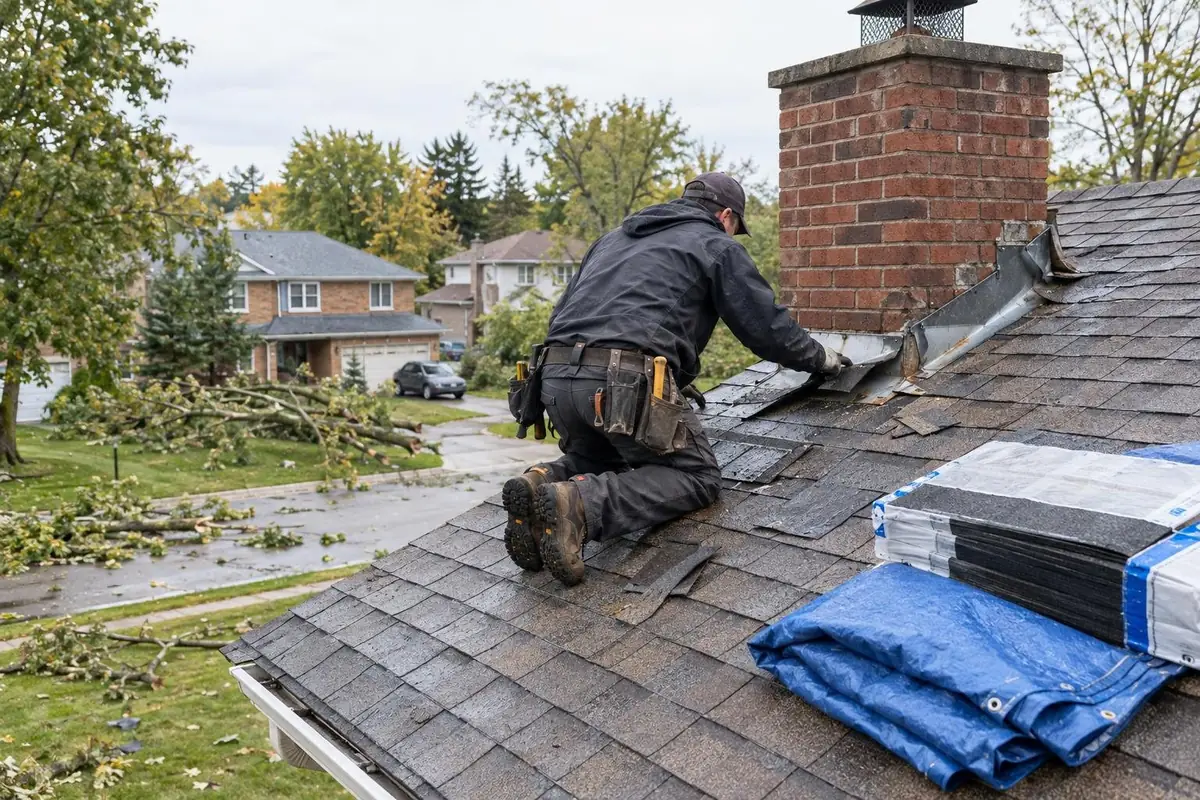
Homeowners with storm damage may also have insurance questions. If you photograph or write up damage for them, say so in plain terms. Never promise how a claim will turn out, because that decision belongs to the insurer.
Paid ads can cover the rush while your pages mature. On the roofing accounts we run, we can switch on storm and emergency campaigns in Google Ads the morning after high winds. Consider pairing roofing SEO with ads during storm season.
What should a roofer's Google Business Profile include?
Your profile carries a lot of the load in roofing SEO, because it is your listing in the map results. Google's profile guidelines ask you to "use as few categories as possible to describe your overall core business." Pick the most specific category that matches your main roofing work.
Like most roofers, you probably work at customers' homes and don't greet visitors at a shop. That makes you a service-area business, and the same guidelines say you "should hide your business address from customers." Set the towns you serve as your service area instead.
Google's local ranking help page says photos and videos let you "tell the story of your business." Add new job photos as you finish roofs. Tear-offs, flashing and finished ridge lines all make good shots. Our Google Business Profile setup guide for contractors walks through the full profile, step by step.
How do reviews help roofing SEO?
Reviews help in two ways. They add to your prominence in Google's eyes, and they help a homeowner choose between roofers. For the roofers we work with, a review request goes out after each job.
Replies count too. Google's local ranking help page says that "when you reply to customer reviews, it shows that you value their feedback." Answer every review briefly, including the rare unhappy one. Our guide on how to get more Google reviews as a contractor covers the timing and the wording.
Should a roofer create a page for every town?
Create a page only for towns where you work and have something specific to say. Google's spam policies list "pages targeted at specific regions or cities that funnel users to one page" as an example of doorway abuse. A pile of near-identical town pages fits that description.
A good location page earns its place. It shows jobs you have finished in that town, the kinds of homes and roofs found in its neighbourhoods and the parts of town you cover. If you can't fill a page like that, keep the town in your service area list and skip the page.
What order should roofing SEO follow?
Here is the order we recommend when we take on a roofing client.
Roofing SEO in seven steps
Step 1
Audit your rankings, profile, website, reviews and competitors.
Step 2
Fix the foundation: technical issues, directory listings and your profile.
Step 3
Build one page for each roofing service you sell.
Step 4
Publish your storm and leak pages before the windy months.
Step 5
Add real job photos to your website and your profile.
Step 6
Ask for a review after every job and reply to each one.
Step 7
Track calls, form leads and booked jobs each month.
The seven steps we follow on a roofing SEO project, from the first audit to the monthly report.
Is SEO worth it for roofers?
SEO is worth it for roofers when it brings in booked work. A roof is a major purchase, so homeowners research before they call. Showing up for the searches they make puts you on their shortlist.
Measure it by that booked work. The Performance report in Google Search Console helps you learn "which queries are bringing traffic to your site." Pair that with your calls and form leads. Then count the inspections and signed jobs that came from those calls and leads. Our monthly roofing reports cover calls, forms and booked jobs.
Be patient, and be wary of big promises. No honest SEO company can guarantee rankings, and we don't promise them.
Frequently asked questions about roofing SEO
How do I get my roofing company to rank on Google?
Roofing SEO starts with a complete Google Business Profile and one page for each roofing service you sell. Add real job photos and ask for a review after every job. Google ranks local results on relevance, distance and prominence, so each step should improve one of those.
Is SEO worth it for roofers?
Yes, when it brings in booked inspections and signed jobs. Judge it by those. Most contractors who use our SEO service see their rankings start to move in two to three months, with stronger results in three to six months, depending on local competition. Track your calls and form leads so you can see what search brings in.
What is the best advertising for a roofing company?
In our experience, the best lead sources for roofers are the Google map results, Google Ads and Local Services Ads. SEO builds your map rankings over months. Ads cover urgent storm and leak demand while those rankings grow.
Should a roofing company show its address on Google?
Show it only if customers visit you there. Google says a service-area business should hide its address from customers and set a service area instead. Most roofers fit that description because the work happens at the customer's home.
Can I rank in towns where I don't have an office?
Yes, you can appear across your service area, but rankings are strongest near your business address. Pages about real jobs in each town help Google connect you to that area.
Next steps
If you want help with roofing SEO, our SEO and Google Business Profile service starts with an audit of your rankings, profile, website, reviews and competitors. You can see how we market roofers on our roofing marketing page. Phone us at 866-898-5439 or book a 30-minute call, and we will look at your market with you.
Keep reading
More on Local SEO.
Keep going with related guides from our library.
HVAC SEO: How Heating and Cooling Companies Win Local Search
A practical guide to HVAC SEO for heating and cooling companies: the pages to build, how to match your Business Profile, and how to plan around furnace season and cooling season.
Read the Guide
SEO for Plumbers: How to Show Up First for Emergency Calls
How plumbing companies show up first when a pipe bursts: a page for each emergency service, accurate Business Profile hours, reviews that name the job and fast pages on a phone.
Read the Guide
Google Business Profile for Contractors: The Setup That Gets Calls
Your Google Business Profile decides whether you show up in the map pack. Here is the exact setup we use for roofers, plumbers, HVAC and every other trade.
Read the Guide